| Source | 60W CO2 |
|---|---|
| Work area | 600 × 400 mm class |
| Best for | Plates, stamps, gifts |
| Duty | Mixed sign-shop days |
| Fixtures | Flat + rotary kits |
| Support | Sunnyrock + showrooms |
Use our contact form for a tailored pack.
Also see toolpath notes and projects.
How the 60W CO2 source and 600 by 400 millimetre bed matter for daily work
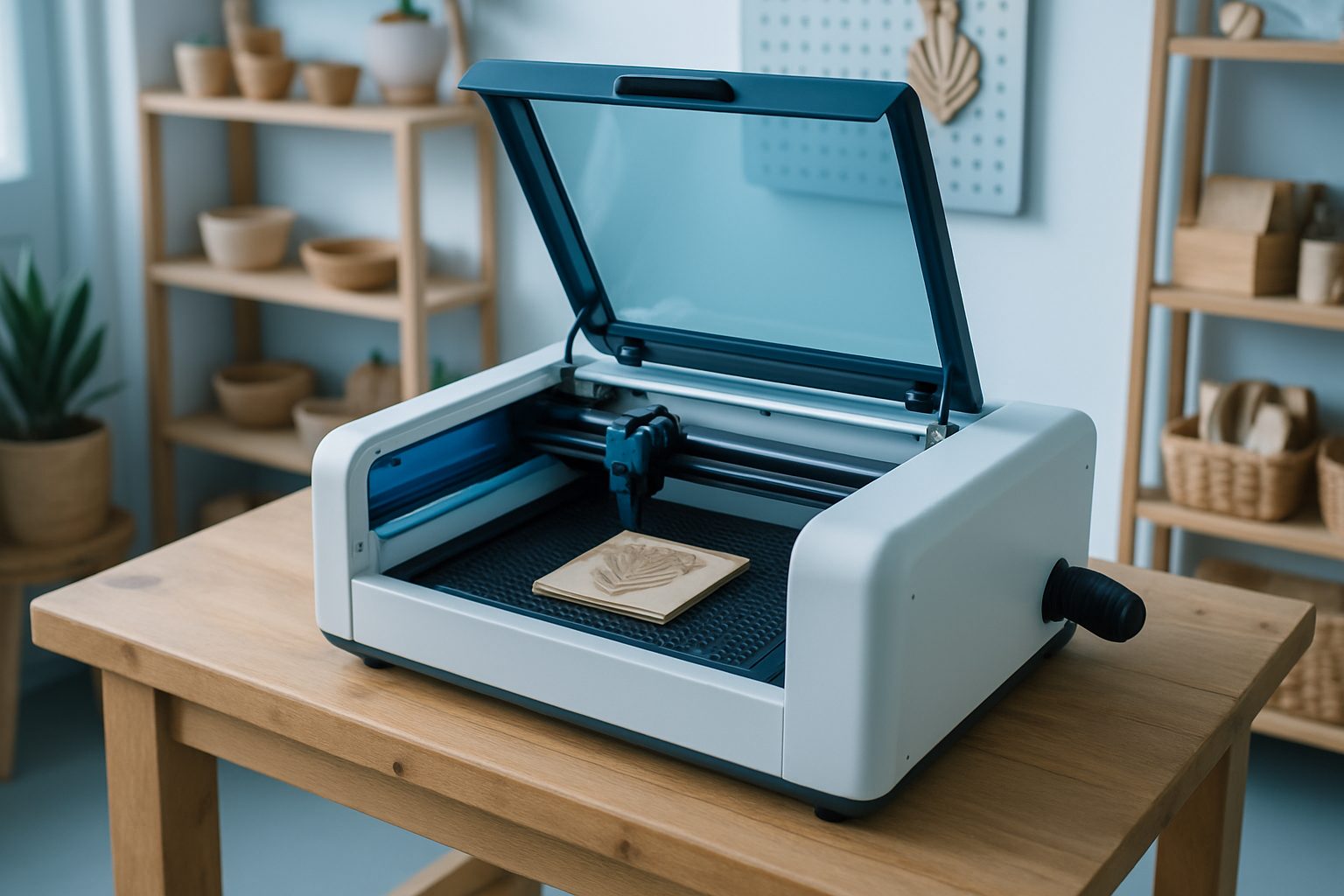
The Benchtop Laser 60 runs a 60 watt CO2 tube over a work area of roughly 600 by 400 millimetres. This means you have enough space for most sign plates, trophy plaques, stamp sheets and common gift blanks, but you are not wrestling with oversized sheets or struggling to fit it into a shop corner. The 60 watt source is strong enough to cut and engrave acrylic up to 10 millimetres, MDF and plywood up to about 6 millimetres, and rubber for stamps. It handles mixed jobs: one hour you will be engraving awards, the next you are cutting out a batch of wooden keyrings or prepping a run of self-ink stamp bases.
Rotary attachments are easy to swap in, so you can take on bottles, tumblers or glassware with the same head. The bed size is well matched for most benchtop fixtures, and fits comfortably on a counter or school bench. In a busy sign shop, it covers those jobs where a bigger sign laser or router would be overkill, and can run lighter jobs in between.
Materials and thicknesses the Benchtop Laser 60 handles well
You can expect reliable results with cast and extruded acrylic, laser-grade MDF, plywood, alder and beechwood, leather (vegetable-tanned), paper, card and laser-safe stamp rubber. For acrylic, cast type gives a clear frosted engraving for awards and nameplates. Extruded acrylic cuts with polished edges, but will flame and melt if you go too slow or run the power too hot. Always leave the plastic film on when possible to reduce scorch marks.
Avoid using PVC, vinyl or anything with chlorine as these release corrosive fumes that damage the machine and harm people. Polycarbonate is not recommended as it chars and discolours. Chrome-tanned leather should be avoided due to hazardous fumes. Expanded polystyrene foam is a fire risk in a laser: use the router cell for foam. For metals, the laser will only mark coated or anodised plates by removing the finish, never engrave bare stainless or raw metals unless you use a marking compound.
- Cuts acrylic up to 10 mm (test for batch and colour)
- MDF and ply up to 6 mm
- Engraves stamp rubber, glass and coated metals
- Rotary for bottles and glasses
- Never laser PVC, vinyl, polycarbonate, or chrome-tanned leather
When the Benchtop Laser 60 is the right fit for your workshop or counter
This cell is sized for shops, counters and school labs that need to handle daily or weekly runs of plates, stamps and branded gifts without taking up the floorspace of a full sign laser. If your bread-and-butter jobs are signs, small shopfit panels, acrylic letters or MDF boards over 600 by 400 millimetres, you might want to step up to a bigger bed or higher power. For regular bottle engraving, confirm your rotary kit choice for glass, plastic or powder-coated metals.
The 60 watt tube is a practical match for South African shop power and workshop ventilation. A typical week: awards and trophy plates Monday, stamp rubber and business gifts Tuesday, then a handful of school badges or bottle engravings by Friday. If you are running in coastal humidity, look after your acrylic and MDF sheets, store them flat and wrapped. For Highveld winters, keep an eye on the chiller water and dust buildup. If you need advice on materials or fixtures, send us a message and we will guide you to the right kit for your mix.
What our EngravCut Studio customers say
Verified Google reviews